How Regenerative Solar Charging Networks Provide Backup Security for Gated Mountain Properties
The Dynamics of Micro-Grid Solar Collection in Dense Canopies
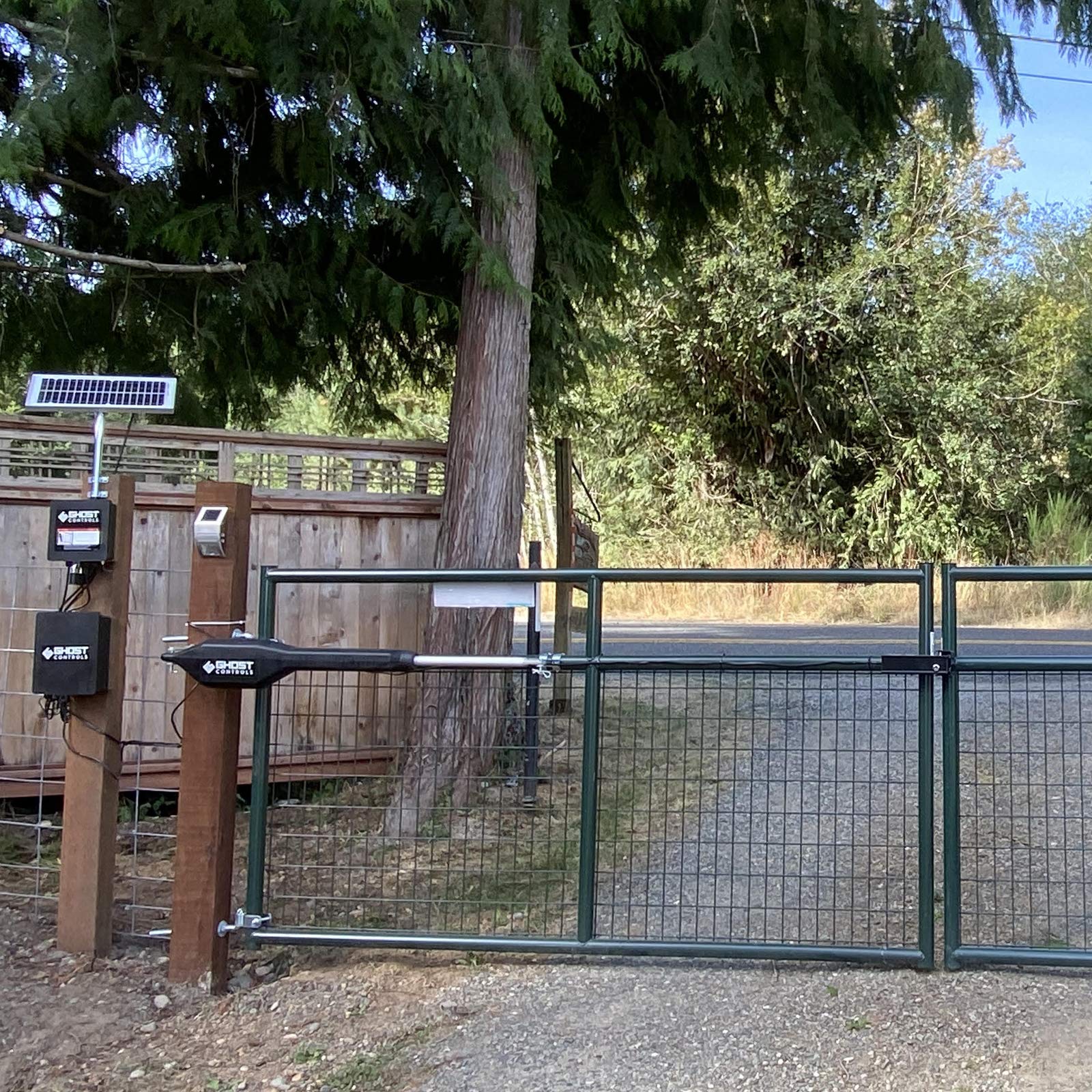
Operating an automated gate flawlessly in alpine or forested terrain requires a sophisticated approach to solar collection. Standard solar panels are designed for wide-open spaces with continuous, direct sunlight. In mountainous zones, however, steep ridges and towering pine trees create complex shade patterns that block light for hours at a time. To overcome this environmental obstacle, our off-grid networks deploy high-efficiency monocrystalline solar panels equipped with advanced bypass diodes. This technology allows the panel to generate a steady, low-voltage charging current even when partially shaded by overhanging branches or dense morning fog, maximizing energy capture through every square inch of exposed cell surface.
The Physics of Lithium Iron Phosphate Energy Matrices
Storing solar energy reliably in cold climates demands a battery chemistry that can withstand extreme temperature drops. Traditional lead-acid or standard AGM batteries experience a rapid drop in chemical efficiency when temperatures drop below freezing, losing up to fifty percent of their operating capacity and failing to provide the high surge current required to start a heavy iron gate leaf. Our premium off-grid packages utilize specialized lithium iron phosphate (LiFePO4) battery banks equipped with integrated internal heating circuits. These smart batteries safely accept a continuous trickle charge at sub-zero temperatures, delivering absolute power density and a consistent electrical flow down to minus four degrees Fahrenheit.
Smart Variable Torque Management and Wind-Load Compensation
High-altitude mountain passes are notorious for producing sudden, high-velocity wind gusts that push with massive physical force against swinging gate panels. When a standard automatic gate operator attempts to swing open into a driving mountain wind, the sudden atmospheric resistance can trip the motor’s internal safety sensors, causing the system to stall out and freeze mid-cycle. Our low-voltage DC operators utilize intelligent microprocessor control boards featuring real-time adaptive torque tracking. The system continuously measures the changing wind resistance against the gate frame, smoothly increasing current output to provide extra rotational force when fighting a gust, and lowering power when the wind subsides to protect the internal gear train from unnecessary wear.
Uninterrupted Perimeter Defense Through Long-Term Grid Outages
For remote luxury properties, a complete failure of the regional power grid can stretch for days before repair crews can clear mountain roads to fix the damage. A standard gate system tied to an AC grid will quickly drain its basic backup batteries within twenty-four hours, leaving the estate completely vulnerable or physically locked down. Because a solar-driven DC network functions on its own self-contained micro-grid, it is completely unaffected by widespread blackout events. Your property line remains fully fortified, your encrypted wireless access keypads stay online, and your automated threshold continues to cycle smoothly and securely through extended utility crises.
Precision Transit Mapping and Environmental Anchor Alignment
Achieving absolute mechanical reliability in rugged terrain requires an exacting installation protocol that accounts for uneven slopes and shifting soil profiles. Mountain driveways are rarely flat, which means gate panels must often be engineered to swing across complex grade changes without dragging on the pavement. Our technicians utilize high-precision digital transit levels to map the exact contours of your driveway opening, aligning the heavy-duty sealed bearing hinges to the exact millimeter to ensure a perfectly level horizontal line of travel. This precise structural calibration keeps your entry gate completely balanced and exceptionally quiet, providing flawless off-grid security for your mountain estate year after year.