Winter Proofing Your Automated Entry: A Pacific Northwest Maintenance Guide

The Impact of Freezing Temperatures on Operator Lubrication
The mechanical components within swing and sliding gate operators rely on specialized grease to ensure smooth, friction-free movement. As temperatures drop toward freezing, standard lubricants can thicken, becoming viscous and sticky. This increased resistance forces the internal motor to work significantly harder to open and close the gate, which can trigger safety obstruction sensors and cause the gate to reverse unexpectedly. Utilizing low-temperature, marine-grade grease on all external hinges, chains, and pivot points prevents tracking issues and protects moving parts from moisture-induced rust.
Protecting Sensitive Access Control Electronics from Moisture
The Pacific Northwest is synonymous with driving rain and high humidity, both of which pose a constant threat to the electrical brains of an automated gate system. Circuit boards, loop detectors, and wire connections housed within the operator casing are vulnerable to condensation buildup. A critical step in winter preparation involves inspecting all weather seals and gaskets on the operator enclosure to ensure they remain completely watertight. Additionally, check that insect screens and drainage holes are clear; blocked pathways can trap moisture inside the unit, leading to corrosion or short circuits that require costly board replacements.
Maintaining Battery Health and Solar Charging Efficiency
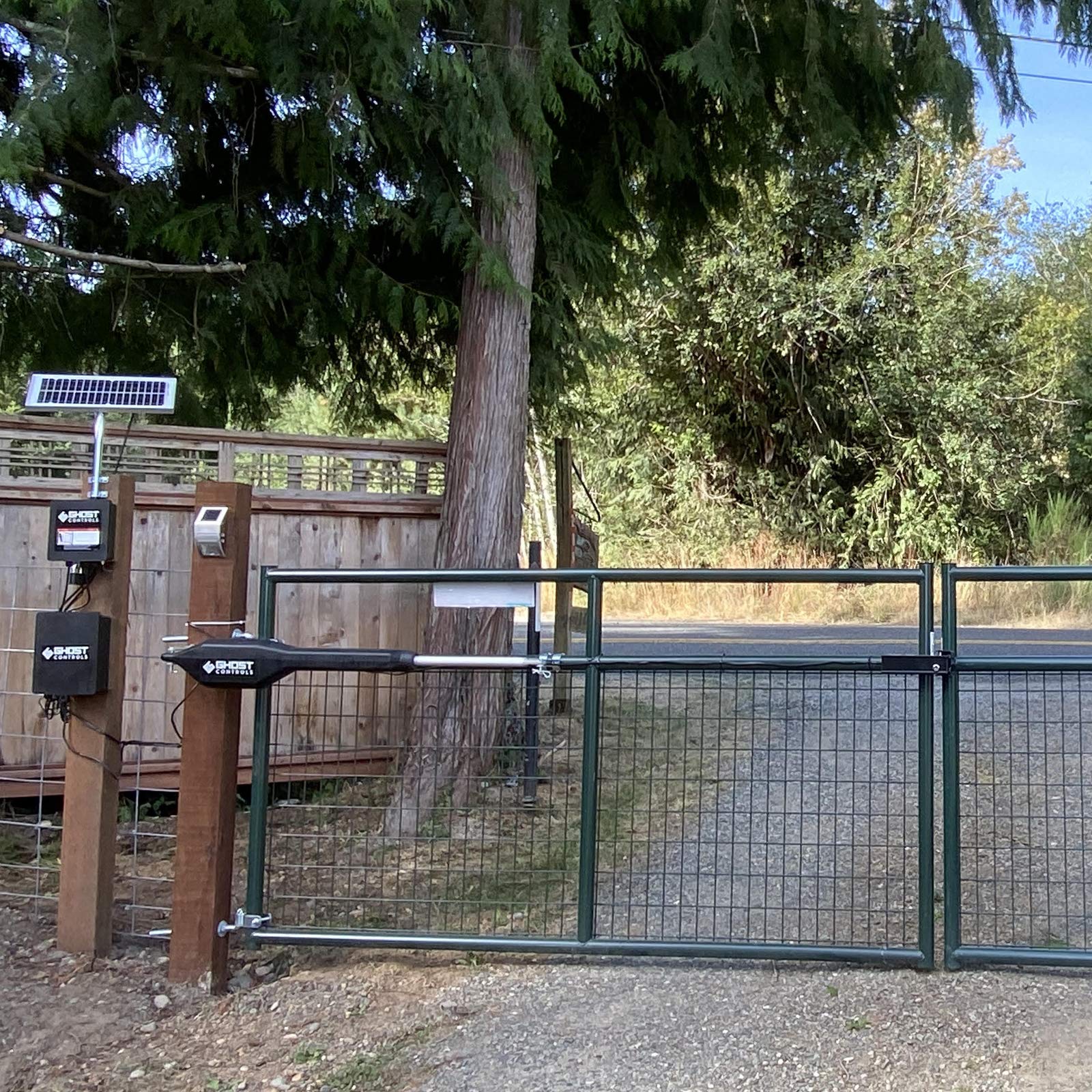
Cold weather drastically reduces the chemical efficiency and overall capacity of backup batteries, which are essential for keeping your gate functional during winter power outages. If your system relies on a solar panel setup, the shorter days and frequent overcast skies of a regional winter mean the charging system is working with limited resources. Ensuring that solar panels are completely clear of algae growth, fallen wet leaves, and debris maximizes light absorption. For standard AC-powered systems with battery backups, testing the battery under load prior to the first freeze guarantees the gate will still cycle safely when the main grid goes down.
Clear Physical Paths: Managing Snow and Debris Accumulation
Sliding gates that operate on a ground track are particularly sensitive to physical obstructions. Accumulations of wet leaves, pine needles, and snow can pack tightly into the track, causing the gate wheels to slip or bind. If a gate hits an accumulation of frozen debris, the internal limits can become uncalibrated, preventing the gate from sealing fully against the catch post. Regularly clearing the physical path of the gate and ensuring that the drainage around the track area functions correctly prevents water from pooling and freezing into solid ice barriers.
Aligning Safety Photo-Beams and Sensors
Safety photo-beams project an invisible infrared light across your driveway entrance to ensure the gate does not close on a vehicle, pet, or person. Heavy winter fog, driving rain, or a layer of frost on the lens can scatter this infrared beam, tricking the system into believing there is a permanent obstruction in the driveway. Wiping down the photo-eye lenses with a soft, anti-static cloth and verifying their physical alignment prevents intermittent operational failures, ensuring your automated entry remains completely reliable and safe throughout the dark winter months.